
How Urlwo Connects Branding, SEO, and Web Usability
Introduction
Most companies invest heavily in their visual identity. They refine logos, choose brand colors carefully, and spend countless hours crafting the perfect messaging. Yet one element of branding often receives far less attention than it deserves: the URL.
Every day, users encounter URLs in search results, social media posts, email campaigns, digital advertisements, and browser address bars. Before a visitor reads a headline or explores a product page, the URL often creates an immediate impression. It can communicate professionalism, trust, relevance, and clarity—or do the exact opposite.
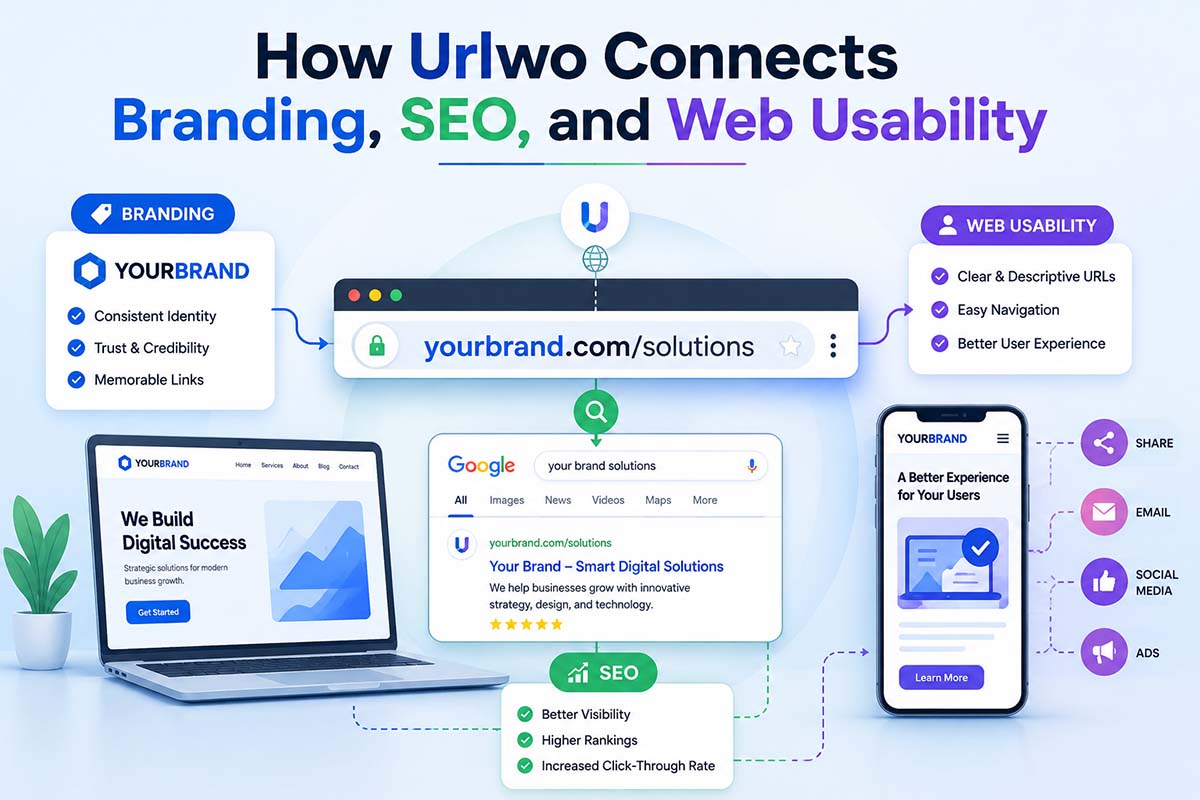
This is where Urlwo enters the conversation. While the term itself is still emerging in digital marketing discussions, it reflects a broader shift in how businesses think about online presence. Rather than treating URLs as purely technical assets, marketers and website owners are beginning to view them as strategic tools that influence branding, search visibility, and user experience simultaneously.
Understanding this connection is increasingly important. Search engines are prioritizing user-focused experiences, consumers are becoming more selective about the websites they trust, and brands are competing for attention in crowded digital environments. In that landscape, even something as simple as a URL can play a meaningful role in shaping outcomes.
Why URLs Matter More Than Most Businesses Realize
For years, URL structure was considered primarily a technical SEO concern. Developers created website architecture, marketers focused on content, and branding teams concentrated on design and messaging.
Today, those lines are much less defined.
A URL is no longer just a web address. It functions as a communication tool. It tells users where they are, what they can expect, and whether a destination appears trustworthy.
Consider two examples:
- yourbrand.com/customer-success-stories
- yourbrand.com/page?id=84291&cat=7
The first immediately communicates purpose. A user can predict the type of content before clicking. The second provides almost no context.
That difference may seem small, but online decisions are often made in seconds. When users scan search results or evaluate links on social platforms, clarity matters.
The most effective digital brands understand that every touchpoint contributes to perception, including the URL itself.
How Urlwo Aligns Branding With User Expectations
Strong branding is often described as consistency across every customer interaction. Companies work hard to ensure their messaging, visual design, and customer experience feel connected.
URLs should be part of that equation.
The concept behind Urlwo highlights an important reality: people notice details. A clean, descriptive URL reinforces professionalism. A confusing or cluttered URL can create uncertainty, even when the underlying content is excellent.
Think about how major brands structure their websites. Their URLs are typically:
- Easy to read
- Easy to remember
- Relevant to the content
- Consistent with brand language
- Simple to share
This consistency helps strengthen recognition over time.
When a user repeatedly encounters organized, meaningful web addresses, the experience feels intentional. That perception contributes to trust, and trust remains one of the most valuable assets a brand can build online.
The SEO Benefits Go Beyond Keywords
Many discussions about URLs focus heavily on keywords. While descriptive URLs can provide context to search engines, modern SEO is far more sophisticated than simply placing keywords in web addresses.
Today’s search algorithms evaluate overall user experience, content quality, relevance, and authority.
That said, URL structure still plays an important supporting role.
Clear URLs help search engines understand site organization. They make content easier to crawl and can improve how pages are interpreted within a broader website hierarchy.
More importantly, they help users.
A search result featuring a clean and understandable URL often appears more credible than one filled with random parameters and unnecessary characters.
This connection between usability and SEO is frequently overlooked. Search engines want to deliver results that satisfy users. When a URL contributes to a better user experience, it supports that objective.
According to guidance from Google’s Search Central documentation, website owners should create simple and meaningful URLs that are understandable to both users and search engines.
How Web Usability Fits Into the Picture
Web usability is often associated with navigation menus, page speed, responsive design, and accessibility. Those elements are certainly important, but usability extends much further.
A website is easier to use when users can predict outcomes.
URLs contribute to that predictability.
Imagine receiving two links from a colleague:
- company.com/resources/marketing-trends-2026
- company.com/index.php?file=resource_288
Most people instinctively trust the first option more. It clearly communicates where the link leads.
This may seem like a subtle detail, but digital experiences are shaped by dozens of small interactions. When enough positive signals accumulate, users feel more comfortable engaging with a website.
That comfort influences behavior.
Visitors are more likely to:
- Click links
- Explore additional pages
- Share content
- Return in the future
- Recommend resources to others
The relationship between usability and trust is stronger than many organizations realize.
Why Modern Marketing Teams Are Paying Attention
Several years ago, URL strategy rarely appeared in branding discussions. Today, the conversation is changing.
Part of the reason is that digital competition has intensified dramatically. Businesses are constantly searching for ways to improve user engagement, strengthen brand perception, and maximize organic visibility.
As a result, marketers are looking beyond traditional tactics.
They are evaluating how every element of the user journey contributes to performance, including:
- Search snippets
- Page titles
- Navigation structures
- Internal linking systems
- URL architecture
The growing interest in concepts such as Urlwo reflects this broader evolution.
Organizations are beginning to recognize that technical decisions and branding decisions are no longer separate conversations. They increasingly influence one another.
Common URL Mistakes That Damage User Experience
Even experienced businesses occasionally make avoidable mistakes.
Some of the most common include:
Overly Complex Structures
Long URLs filled with categories, parameters, and unnecessary words can become difficult to read and share.
Frequent URL Changes
Constantly modifying URLs can create broken links, redirect issues, and confusion for returning visitors.
Prioritizing Systems Over Users
Many websites generate URLs based on internal database structures rather than user understanding.
Ignoring Consistency
Different URL patterns across a website can make navigation feel disorganized and reduce perceived professionalism.
In most cases, the simplest solution is also the most effective: prioritize clarity.
Looking Ahead: The Future of URL Strategy
As search behavior evolves and user expectations continue rising, URL strategy will likely become even more closely connected to broader digital experience initiatives.
Artificial intelligence, personalized search experiences, and increasing concerns about online trust are all influencing how users evaluate websites.
In that environment, clarity becomes a competitive advantage.
The businesses that succeed will not simply optimize URLs for algorithms. They will design them for people.
That distinction matters.
When URLs support branding, improve navigation, and create confidence, they become more than technical infrastructure. They become part of the experience itself.
FAQs
What does Urlwo refer to?
Urlwo is commonly associated with discussions around URL strategy, branding, SEO, and web usability. It reflects the growing importance of user-friendly and strategically structured web addresses.
Can URL structure influence search performance?
While URLs are not a major ranking factor on their own, well-structured URLs help search engines understand content and improve user experience.
Why do branded URLs matter?
Branded URLs improve recognition, strengthen trust, and create a more consistent digital experience across marketing channels.
What makes a URL user-friendly?
A user-friendly URL is typically short, descriptive, relevant to the page content, and easy to understand at a glance.
Conclusion
The conversation around Urlwo highlights an important shift in modern digital strategy. Businesses can no longer afford to view branding, SEO, and usability as separate disciplines. The most effective websites create alignment between all three, and URL structure is one of the simplest yet most overlooked ways to achieve that balance. When organizations build URLs with both people and search engines in mind, they create stronger experiences, greater trust, and a more sustainable foundation for long-term online growth.


