
How Repmold Is Reshaping Modern Product Development
Introduction
Modern manufacturing depends on speed, precision, and the ability to move from concept to production with minimal delays. As product development cycles continue to shrink, companies are increasingly adopting smarter tooling and prototyping methods that reduce costs while maintaining quality. Repmold has emerged as one of the technologies attracting attention for its ability to streamline mold production and support faster design validation without relying entirely on conventional manufacturing processes.
Whether developing consumer electronics, automotive components, medical devices, or industrial products, manufacturers need flexible production methods that allow rapid iteration. This article explores how Repmold fits into today’s manufacturing landscape, where it delivers the greatest value, and why it is becoming part of modern product development strategies.
The Growing Need for Faster Product Development
Today’s manufacturers face greater pressure than ever before. Markets evolve quickly, customer expectations change rapidly, and competition often depends on how efficiently companies can launch new products.
Traditional tooling methods remain essential for high-volume manufacturing, but they often involve:
- Long design cycles
- High upfront tooling costs
- Multiple design revisions
- Expensive prototype iterations
- Delayed product launches
Digital engineering has transformed this process by allowing teams to simulate, test, and refine products before investing in permanent production tooling. Technologies that accelerate these workflows help companies reduce both financial risk and development time.
Understanding Repmold in Modern Manufacturing
At its core, Repmold refers to a manufacturing approach focused on creating molds more efficiently for prototype and low-volume production. Instead of relying solely on traditional machining techniques, modern workflows often integrate digital design, additive manufacturing, precision machining, and advanced molding methods to shorten development cycles.
Rather than replacing conventional injection molding, this approach complements existing manufacturing systems by enabling engineers to evaluate product performance before committing to expensive production tools.
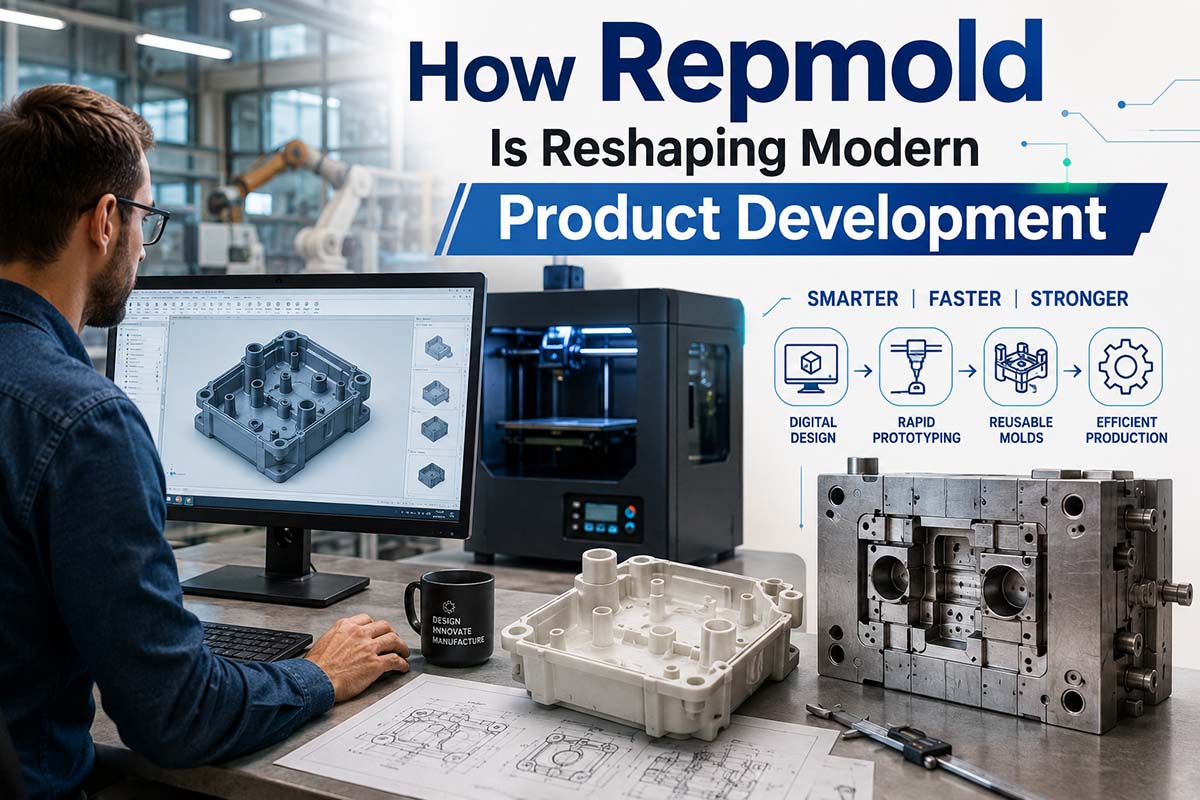
Typical workflows include:
- Creating a CAD model.
- Producing a prototype mold.
- Manufacturing sample parts.
- Testing product performance.
- Refining the design.
- Transitioning to production tooling when appropriate.
This iterative process allows organizations to identify design issues much earlier than traditional manufacturing methods.
How Repmold Improves Product Development Workflows
One of the greatest advantages of this manufacturing approach is its impact on the entire product development lifecycle.
Faster Design Validation
Engineers rarely create a perfect product on the first attempt. Prototype molds allow designers to evaluate:
- Fit and assembly
- Structural performance
- Material behavior
- User experience
- Manufacturing feasibility
Earlier testing means fewer costly changes later.
Reduced Development Costs
Traditional steel tooling can represent a significant investment, especially when products are still evolving.
Prototype-oriented mold production allows organizations to:
- Avoid unnecessary tooling expenses
- Validate designs before mass production
- Reduce material waste
- Improve budgeting accuracy
For startups and small manufacturers, this flexibility can significantly lower development risk.
Shorter Time to Market
Speed often determines competitive advantage.
Manufacturers that quickly test and improve products can:
- Respond to customer feedback faster
- Launch products sooner
- Stay ahead of competitors
- Reduce project delays
Accelerated iteration has become one of the defining characteristics of modern manufacturing.
Repmold and Digital Manufacturing Integration
Digital manufacturing is built around connected workflows rather than isolated production steps.
Modern engineering teams frequently combine technologies such as:
- CAD software
- Computer simulations
- CNC machining
- Industrial 3D printing
- Quality inspection systems
- Digital twins
- Automated production planning
Within this environment, Repmold serves as a bridge between digital product design and physical manufacturing. Engineers can transform virtual models into functional prototype components much more efficiently than relying solely on conventional tooling.
This integration improves collaboration across design, engineering, quality assurance, and production departments.
Industries Benefiting from Repmold
Although every manufacturing sector has unique requirements, several industries benefit particularly well from rapid mold development.
Automotive
Vehicle manufacturers constantly improve:
- Interior components
- Dashboard assemblies
- Air ducts
- Plastic housings
- Functional prototypes
Rapid tooling helps engineers evaluate designs before investing in production-scale molds.
Medical Devices
Medical manufacturing often requires extensive testing and regulatory validation.
Prototype molds assist with developing:
- Diagnostic equipment
- Laboratory devices
- Surgical instrument components
- Medical enclosures
Shorter development cycles support faster innovation while maintaining quality standards.
Consumer Electronics
Electronic products evolve rapidly.
Manufacturers frequently redesign:
- Device housings
- Wearables
- Smart home products
- Portable accessories
Prototype tooling enables repeated refinements without excessive manufacturing costs.
Industrial Equipment
Factories also benefit from rapid mold development when producing:
- Equipment covers
- Control panels
- Machine components
- Replacement parts
This flexibility reduces downtime during product improvements.
Comparing Prototype Mold Production with Traditional Tooling
Both manufacturing approaches remain valuable, but each serves different purposes.
| Prototype-Oriented Approach | Traditional Production Tooling |
|---|---|
| Faster turnaround | Longer production timeline |
| Lower initial investment | Higher tooling cost |
| Best for testing | Best for mass production |
| Easier design revisions | Design changes are expensive |
| Ideal for low-volume production | Ideal for high-volume manufacturing |
Choosing the right option depends on project goals, production volume, budget, and expected product lifespan.
Design Flexibility Creates Better Products
One overlooked benefit of modern prototyping methods is the freedom to experiment.
Engineers can evaluate multiple versions of the same component by adjusting:
- Wall thickness
- Material selection
- Internal geometry
- Ergonomics
- Surface finish
- Structural reinforcement
Rather than relying on assumptions, teams can make decisions using real-world testing.
This data-driven development process often leads to higher-quality products before commercial launch.
Challenges Manufacturers Should Consider
While rapid mold development offers many advantages, it is not the right solution for every situation.
Organizations should evaluate several factors before implementation.
Material Limitations
Some prototype mold materials cannot match the durability of hardened production steel.
For very high production volumes, permanent tooling remains the preferred choice.
Production Scale
Prototype-oriented manufacturing is typically optimized for:
- Concept validation
- Functional testing
- Small production batches
Extremely large manufacturing runs usually require conventional tooling.
Initial Learning Curve
Companies adopting digital manufacturing technologies may need investment in:
- Software
- Equipment
- Staff training
- Process integration
However, these investments often improve long-term efficiency across multiple projects.
Future Trends Shaping Modern Product Development
Manufacturing continues to evolve as digital technologies become more advanced.
Several trends are expected to influence future workflows.
Artificial Intelligence
AI-assisted design tools can identify manufacturing improvements before prototypes are produced.
Advanced Simulation
Virtual testing reduces the number of physical iterations required during development.
Sustainable Manufacturing
Reducing material waste and unnecessary tooling supports broader sustainability initiatives.
Automation
Automated manufacturing systems continue to improve consistency while reducing manual intervention.
Hybrid Manufacturing
Many organizations now combine additive manufacturing, CNC machining, and advanced molding techniques into integrated production systems.
As these technologies mature, manufacturers will likely continue adopting more agile development strategies that emphasize flexibility and rapid innovation.
Best Practices for Successful Implementation
Organizations considering modern mold development should follow several practical guidelines.
- Define prototype objectives before manufacturing begins.
- Use accurate CAD models to minimize revisions.
- Select materials appropriate for testing requirements.
- Involve manufacturing engineers early in product development.
- Collect performance data throughout prototype evaluation.
- Plan the transition from prototype tooling to production tooling.
A structured process helps maximize both efficiency and product quality.
Learning More About Modern Manufacturing
Professionals interested in manufacturing innovation can explore industry standards, research publications, and technical resources provided by the National Institute of Standards and Technology (NIST), which offers valuable information on advanced manufacturing technologies and engineering best practices.
FAQs
What is Repmold used for?
It is primarily used to support faster mold creation for prototype development, product testing, and low-volume manufacturing before full production begins.
Is it a replacement for traditional injection molding?
No. It complements traditional manufacturing by helping companies validate designs before investing in permanent production tooling.
Which industries benefit the most?
Automotive, medical devices, consumer electronics, aerospace, and industrial manufacturing commonly use rapid tooling techniques during product development.
Does it reduce manufacturing costs?
It can reduce development costs by minimizing expensive design revisions and avoiding unnecessary investment in production tooling during early design stages.
Conclusion
Modern manufacturing increasingly depends on faster development cycles, smarter engineering decisions, and flexible production strategies. By enabling quicker design validation, lower development risk, and improved collaboration between engineering and manufacturing teams, Repmold is helping organizations bring innovative products to market more efficiently while supporting higher-quality outcomes.
Also Read: Readmymanga


